
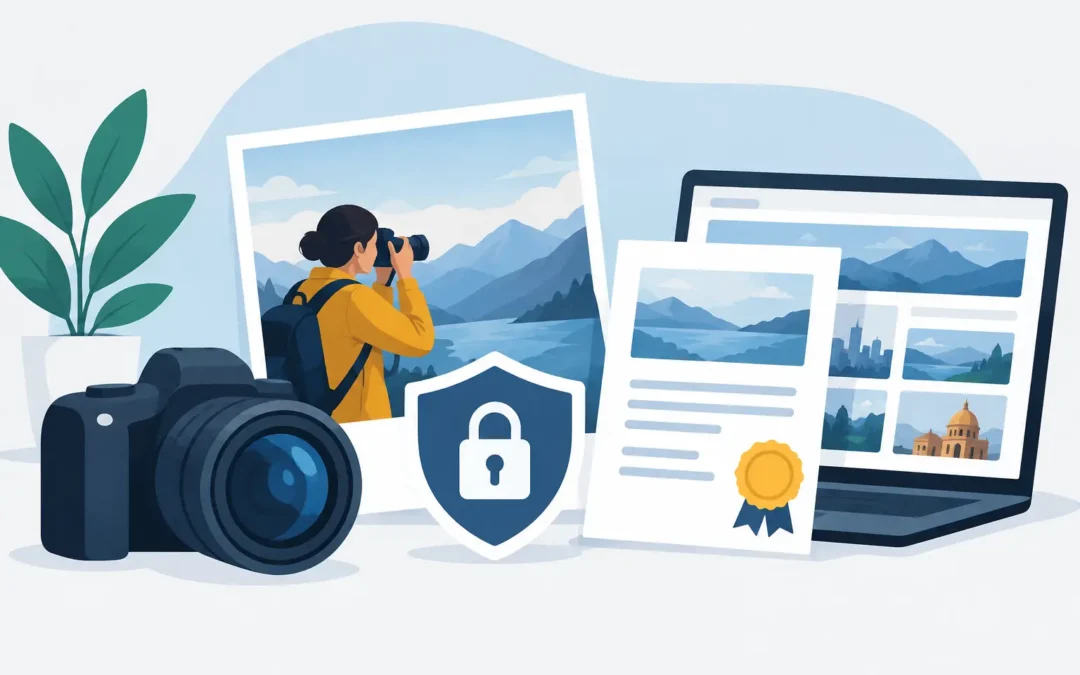
A photograph can appear in a magazine for one day and retain value for years. The difference is not only the image itself, but the terms attached to it. This editorial photography licensing guide is for publishers, creative directors, publicists, and arts organizations that need clarity before a portrait, feature, or cultural story goes live.
Editorial licensing is often treated as an administrative detail after the shoot is complete. It is better understood as part of the editorial decision. The intended audience, distribution, duration, placement, and relationship to the subject all affect what an image is worth and what permissions are required.
What an Editorial Photography License Actually Covers
A license is permission to use a photograph in specific, agreed-upon ways. It does not transfer ownership of the image. In most commissioned and editorial contexts, the photographer retains copyright unless a written agreement says otherwise.
The license should identify the licensee, which may be a publication, publisher, agency, arts institution, or brand. It should also define the project. “Editorial use” is too broad on its own. A feature in a quarterly print magazine, its corresponding website article, and social posts promoting that article are distinct uses, even if they support the same story.
For a portrait of a writer, musician, artist, or public figure, the license may cover a single article and its promotional channels. A broader arrangement might include a print edition, a digital archive, newsletters, social media, and syndication. Neither approach is inherently better. The appropriate scope depends on the assignment, budget, circulation, and long-term value of the work.
Editorial use generally means the image accompanies reporting, criticism, commentary, or cultural coverage. It is not the same as advertising. If a beauty brand places a portrait in an ad, uses it on product packaging, or turns it into paid promotional creative, that is commercial usage and should be separately negotiated.
Define Use Before the Shoot
The cleanest licensing conversations happen before production begins. A commissioning editor may have a clear intention for the initial story but no visibility into future uses. A publicist may request assets for press distribution. A creative director may see potential for a publication feature and a branded event. Those possibilities should be discussed while the scope is still flexible.
Start with the basic questions: Who will use the photographs? Where will they appear? For how long? In which territories? Will the images be cropped, paired with text, translated, or distributed by partners? Will any use be paid media or tied directly to a product or service?
A short, precise brief protects everyone. It also preserves the tone of the work. A carefully composed portrait can lose its intended effect when it is heavily cropped for a vertical social placement or placed beside unrelated promotional copy. Licensing is partly about compensation, but it is also about authorship and context.
Publication, platform, and territory
Print and digital should be named separately. A magazine’s website may be a straightforward extension of the print feature, while a publisher’s social accounts, newsletter, video channels, affiliate partners, and content syndication network can create a much wider footprint.
Territory matters most when a story has international distribution or the commissioning organization operates across multiple editions. A regional cultural journal may only need North American rights. A global publication may need worldwide use. A license can accommodate either without treating them as equivalent.
Duration deserves the same attention. One-time publication rights are common for editorial work. A six-month, one-year, or perpetual digital archive license may make sense when a publisher maintains searchable stories indefinitely. Perpetual use should be specific, not a catchall for every future campaign or platform.
Exclusivity and timing
Exclusivity limits where and when a photographer may license the same images elsewhere. A publication investing in an original feature may reasonably ask for a short exclusive window before the work appears in another outlet or in the photographer’s portfolio.
The key is proportion. A 30- to 90-day editorial exclusivity period may serve a timely feature. Indefinite exclusivity can be restrictive, particularly for images of cultural figures whose relevance extends beyond a single publication cycle. If exclusivity is requested, the agreement should state the duration, territories, platforms, and any fee attached to that limitation.
Embargoes are related but different. A publicist may require that images not be released before an album, exhibition, book, or film announcement. That is a publication timing condition. It does not automatically grant the publication exclusive rights after the embargo lifts.
The Editorial Photography Licensing Guide to Fees
Licensing fees reflect more than file delivery. They account for audience reach, prominence, duration, territory, exclusivity, production complexity, and the significance of the subject. A cover image, a lead portrait for a major profile, and a small interior image in a local calendar should not be priced as though they carry identical value.
Assignment fees and licensing fees may be combined or separated. A day rate can cover the photographer’s time, creative direction, equipment, preproduction, and shooting. Usage can then be defined as part of that fee or quoted separately. Separating the two is often useful when a client needs expanded rights after the original publication plan changes.
Editorial budgets vary. A smaller nonprofit arts publication may need modest rights for a limited print run and its website. A national publisher with broad social distribution and a permanent archive has a different licensing profile. Clear scope makes those differences easier to address without reducing the conversation to a single flat number.
Do not assume that a file supplied to a publicist is free for unrestricted use. Press use may be granted for specific publicity surrounding a project, often with required credit and no alteration beyond standard formatting. A publicist’s press kit should not become a source of paid brand advertising, merchandise, or third-party licensing without permission.
Credit, Edits, and Image Integrity
A photographer credit should be stated in the license and included wherever practical: in print, online captions, image metadata, and social copy. Credit is professional attribution, not a substitute for payment. It helps readers, editors, and future collaborators understand where the image came from.
Standard editorial adjustments are usually expected. Cropping for layout, color correction for reproduction, and minor retouching may be appropriate when they preserve the image’s meaning. More substantial changes require discussion. Removing people or objects, adding graphics that alter the scene, applying aggressive filters, or using an image beside misleading copy can compromise both the photograph and the subject.
Approval rights should be used carefully. Editorial independence matters, and a publisher may not be able to offer subject or photographer approval over the final story. Still, it is reasonable to define how images can be altered and to establish a process for flagging a use that falls outside the agreed scope.
Releases Are Not the Same as Licenses
A photo release and a license solve different problems. A model release records a subject’s permission for certain uses of their likeness. A property release may address a privately owned location, artwork, or recognizable property. The photographer’s license grants permission to use the copyright in the photograph.
For purely editorial reporting, releases are not always required in the same way they are for advertising. But a publication or brand should not assume that editorial context eliminates every concern. Privacy, publicity rights, venue restrictions, union rules, brand marks, and the subject’s contractual obligations can all affect what is prudent.
The safest approach is to identify the intended use honestly. Calling a brand promotion “editorial” does not make it editorial. If the image is helping sell a product, service, or ticketed experience, commercial permissions may be needed.
A Clear Agreement Supports Better Work
The agreement does not need to be long to be useful. It should name the images or assignment, the client, allowed media, territory, term, exclusivity if any, fee, payment timing, credit, and restrictions on sublicensing or commercial use. It should also state what happens if the client wants additional usage later.
Keep the conversation direct when circumstances change. A publisher may later want to use a feature portrait on a conference banner. A cultural institution may want to include an image in an exhibition catalog. A brand may ask to repost an editorial portrait after sponsoring the subject. These are normal requests, but they are new requests. A brief written amendment is usually enough.
For high-visibility assignments, have counsel review terms that involve broad indemnity, work-for-hire language, perpetual exclusivity, or rights to use images in AI training, data sets, or unspecified future media. Those clauses can reach far beyond the original editorial purpose.
A well-licensed image stays useful because everyone understands its boundaries. Put the intended use in writing early, leave room for future conversations, and let the photograph keep doing what it was made to do: give the story a distinct point of view.