
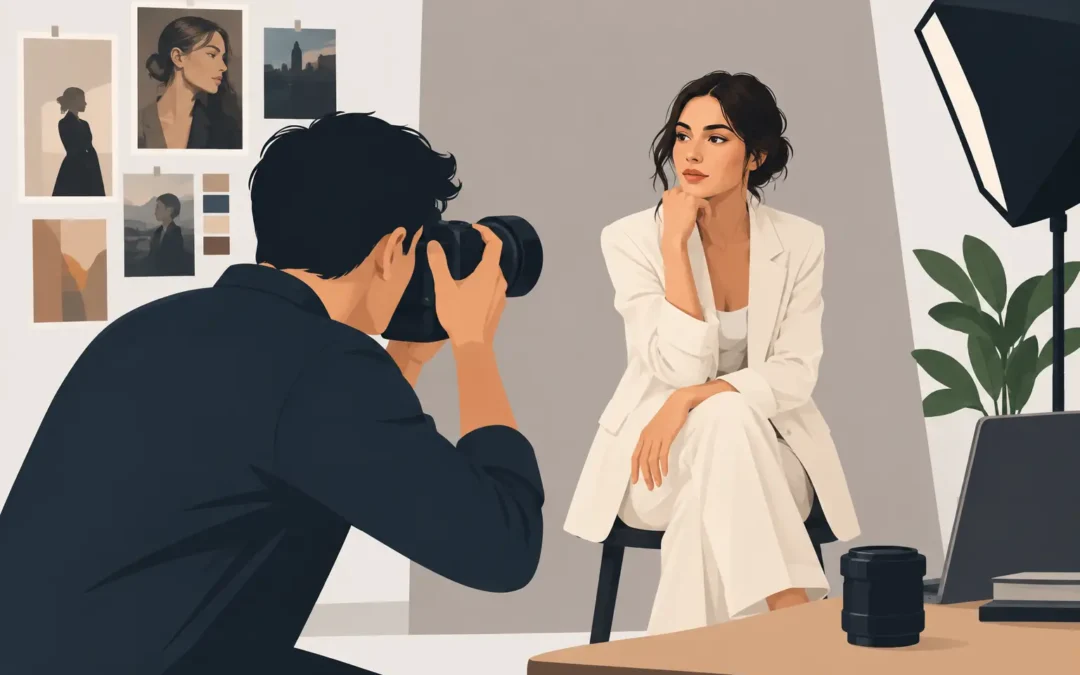
A portrait is often the image that outlives the campaign brief. It is the photograph an editor returns to for a feature opener, a publicist sends with an announcement, or a creative director selects when a brand needs to look more like itself. That is why hire a portrait photographer is not simply a production question. It is a question of authorship, access, and what an image communicates before anyone reads the accompanying copy.
For editorial teams, publicists, talent representatives, and brands, the difference between a serviceable headshot and an enduring portrait is rarely accidental. A strong portrait creates a clear encounter with a person. It carries mood, position, intelligence, humor, reserve, or force without reducing its subject to a pose.
Why Hire a Portrait Photographer Instead of Relying on Convenience
A quick image can solve an immediate need. A phone portrait, event photograph, or image taken against a blank office wall may be adequate for a small announcement or internal use. But public-facing work has a longer life and a wider set of demands. It may appear in a publication, be cropped for social channels, circulate through press desks, or become the defining image attached to a person or project for years.
A professional portrait photographer works beyond the moment of capture. They consider how light describes a face, how a setting contributes to the narrative, and how wardrobe, color, gesture, and framing establish a visual language. The result is not merely flattering. It is specific.
Specificity matters when a subject is already visible. Actors, writers, founders, artists, and cultural figures are often photographed repeatedly. The assignment is not to produce another acceptable image. It is to make a photograph that gives an audience a fresh, credible way of seeing them.
For a brand, the same principle applies. Generic portraiture can make a distinctive company appear interchangeable. A considered commission can establish a recognizable point of view across a launch, profile, campaign, or long-term archive.
A Portrait Photographer Directs Without Flattening the Subject
Many subjects arrive at a shoot with practiced expressions and understandable caution. They may be accustomed to being photographed, or they may have little interest in the process at all. Neither condition is a problem when the photographer has the ability to create trust quickly.
That trust is practical as much as personal. It comes from clear direction, a calm set, and a photographer who knows when to adjust a shoulder, change the light, pause the conversation, or let the subject settle into their own rhythm. The goal is not to impose a personality on someone. It is to make room for the one that is already there.
This is where an editorial sensibility becomes especially valuable. A portrait photographer understands that a compelling image needs tension as well as polish. A perfectly pleasant expression may be appropriate for a corporate directory. It may be less useful for a magazine profile, artist announcement, or beauty story that needs shape and atmosphere.
There is a trade-off. Highly directed imagery can feel more composed and graphic, but may offer less spontaneity. A looser approach can produce surprise, though it requires more time and a subject comfortable with uncertainty. The right balance depends on the story, the platform, and the person in front of the camera.
The Best Portraits Begin Before the Shoot
Good portraiture is often mistaken for instinct alone. Instinct matters, but preparation is what allows instinct to be useful under pressure. Before an assignment, the photographer should understand where the image will live, what the story requires, and what existing visuals should be avoided or extended.
For an editorial feature, that may mean reading the interview angle and considering whether the portrait should feel intimate, theatrical, observational, or formal. For a brand, it may mean studying the campaign art direction, planning for multiple formats, and identifying locations that support the message without becoming decorative noise.
Production decisions affect the final image more than clients sometimes expect. A location can offer texture, depth, and context, but it introduces weather, sound, permits, and distractions. A studio gives greater control over light and pace, but demands more careful decisions around backdrop, styling, and physical presence. Neither is inherently more elevated. The setting has to earn its place in the frame.
An experienced photographer also anticipates the practical requirements around the portrait: usage, turnaround, visual consistency, and the need for options. A publication may need vertical and horizontal compositions. A publicist may need a clean, adaptable image alongside something more expressive. A creative director may need room for type, motion crops, or a sequence of related images. Planning for these needs protects the work from becoming overly narrow.
Craft Creates Freedom on Set
Technical control is not separate from creative expression. It is what makes expression possible when the light changes, time contracts, or a location proves less cooperative than expected.
A portrait photographer knows how to shape available light rather than simply accept it. They understand how lens choice changes the relationship between subject and viewer, how a close frame can intensify presence, and how negative space can make a portrait feel quieter or more monumental. They make decisions about contrast, color, texture, and depth with intention.
This control also makes the set more efficient. When a talent representative has granted fifteen minutes, or an editorial team is working around a tight schedule, there is little value in trial-and-error lighting that leaves the subject waiting. Preparation allows the photographer to concentrate on the exchange in front of the camera.
Retouching belongs in this conversation, too. Thoughtful post-production can refine distractions, preserve tonal cohesion, and ensure that an image reproduces well across print and digital formats. It should not erase the qualities that make a person recognizable. Skin texture, expression lines, asymmetry, and character are not flaws to be corrected by default. The standard is considered finish, not artificial perfection.
Portraits Build an Image Archive, Not Just a Deliverable
The strongest commissions keep working after their original use has passed. A single well-made portrait can support press coverage, speaking announcements, social channels, book jackets, exhibition materials, talent pages, and future editorial requests. A connected series can become a visual record of a particular period in a person’s career or a brand’s evolution.
That value is especially clear for creative organizations and public figures. Audiences recognize inconsistency, even if they cannot name it. When imagery moves between stock-like photography, casual snapshots, and polished campaign work without a coherent reason, the public identity feels fragmented. A portrait commission provides an opportunity to set a standard rather than react to the next deadline.
This does not mean every image should look identical. Visual identity is not repetition. It is a consistent level of judgment: images chosen for their point of view, their emotional clarity, and their ability to hold attention without overexplaining themselves.
For clients commissioning portraits regularly, a relationship with a photographer can sharpen that standard over time. The photographer learns the subject’s working style, understands the client’s visual history, and can recognize when a new direction is warranted. Familiarity does not have to produce sameness. At its best, it creates room for more ambitious work.
Choosing the Right Photographer for the Assignment
Portfolio fit should lead the decision. Look past the category labels and consider what the work consistently does. Does the photographer make subjects feel present? Can they move between clean studio imagery and location work without losing their eye? Do the portraits have clarity, or do they rely on effects that may date quickly?
It is also worth considering the experience around the photographs. A refined final image is essential, but so are professional communication, sensitivity around talent, production judgment, and the ability to work within an editorial schedule. The most appropriate photographer is not necessarily the one with the largest crew or the most elaborate treatment. It is the one whose visual instincts and working method match the assignment.
A useful brief leaves room for that expertise. Share the intended use, desired feeling, practical constraints, key references, and what must be avoided. Then allow the photographer to make the decisions that justify the commission. The most memorable portraits rarely come from trying to reproduce a reference exactly. They come from a clear idea, a prepared team, and enough trust for something particular to happen in the frame.
When the image will stand in for a person, a publication, or a cultural moment, it deserves more than convenience. Give the portrait enough thought to become the one people remember.